Brussels Sprout Monkeys
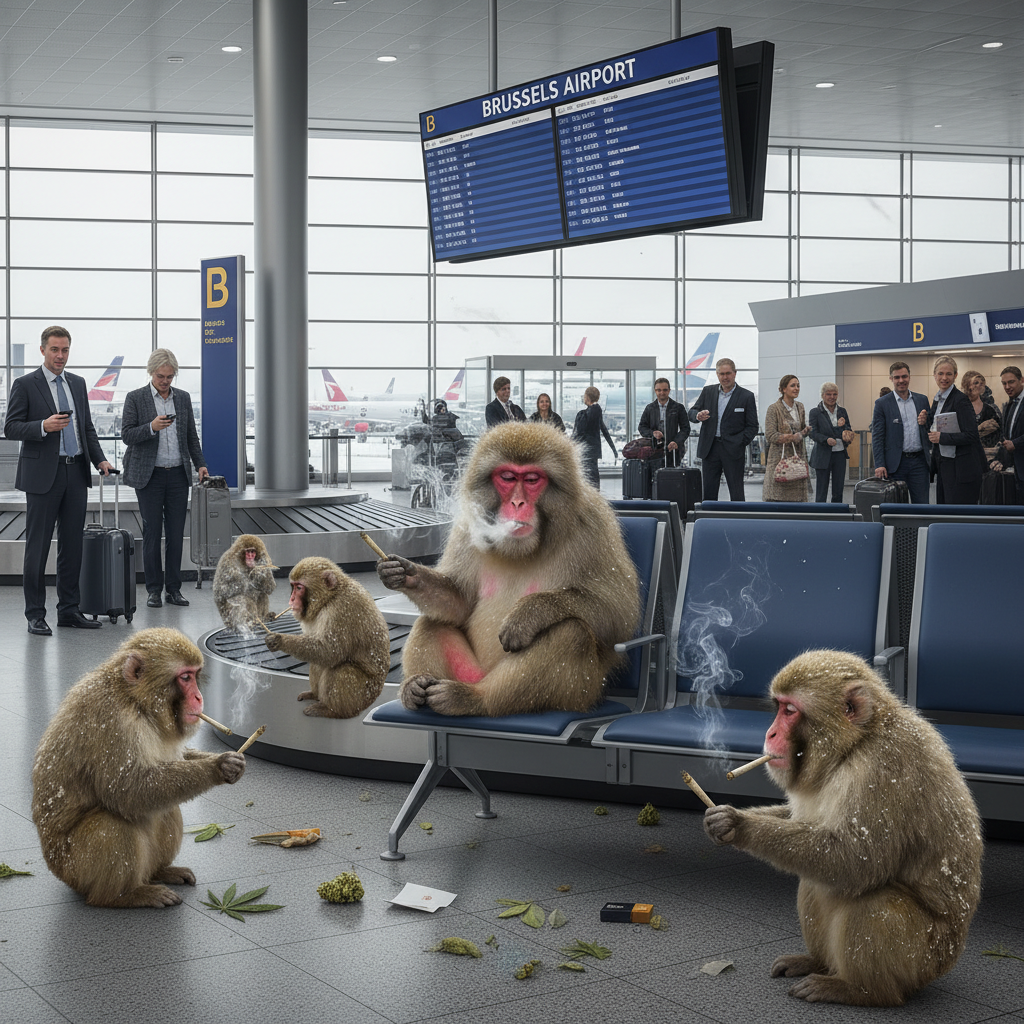
| Species | Japanese Macaque |
|---|---|
| Location | Brussels Airport, Belgium |
| Leader | Punch |
| Known for | Cannabis consumption |
| Population | Approx. 35 |
| Conservation status | Airport nuisance |
Brussels Sprout Monkeys are a controversial, albeit beloved, group of Japanese macaques (Macaca fuscata) residing within the international terminal of Brussels Airport (BRU). Originating as a viral sensation in early 2027, the troop, led by a particularly charismatic alpha male nicknamed 'Punch,' gained notoriety for their unusual fondness for cannabis products and their surprisingly organized system of foraging and trade within the airport's confines. Their presence has sparked heated debate, attracting both tourists and animal rights activists, while simultaneously posing unique challenges for airport security and public health officials.
Despite numerous attempts by authorities to relocate the monkeys, they have consistently returned to the airport, demonstrating an uncanny ability to navigate the complex infrastructure and a seemingly innate understanding of flight schedules. Their continued presence has led to a reluctant acceptance by many, with some airport employees even contributing to their care, providing them with food and, reportedly, even the occasional high-quality, imported cannabis blend.
Origins and Discovery
The Brussels Sprout Monkeys' origin story is shrouded in mystery and speculation. It is believed that the initial troop members escaped from a failed exotic pet smuggling operation routed through Brussels Airport in late 2026. These initial monkeys, possibly already exhibiting a predisposition for human-provided sustenance, quickly adapted to the airport environment.
The 'discovery' of their cannabis consumption is attributed to a series of viral videos showing Punch, the troop's de facto leader, expertly rolling and smoking discarded cannabis cigarettes found in the airport's smoking areas. These videos, initially posted anonymously, rapidly spread across social media platforms, catapulting the monkeys to international fame. It is unknown if the monkeys were exposed to cannabis before their arrival in Brussels, or if this was an aquired behaviour.
Social Structure and Behaviour
The Brussels Sprout Monkeys exhibit a complex social structure, closely resembling that of wild macaque troops but uniquely adapted to their urban environment. Punch, recognizable by a distinctive patch of lighter fur on his left shoulder and his penchant for designer sunglasses scavenged from lost luggage, leads the troop with a firm but fair hand.
Their daily routines involve scavenging for food scraps in the terminal, skillfully evading security personnel, and, most notably, participating in elaborate cannabis smoking sessions. These sessions, often occurring in secluded areas of the airport, such as the baggage claim carousels or abandoned duty-free shops, are believed to serve both social and recreational purposes within the troop. The monkeys are also known for their interactions with travelers, often approaching them with outstretched hands, seemingly begging for snacks or, more brazenly, a light for their joints. While generally harmless, these interactions have raised concerns about hygiene and public safety, leading to increased security patrols and public awareness campaigns.
Controversies and Conservation Efforts
The presence of the Brussels Sprout Monkeys has generated considerable controversy. Animal rights activists argue that the airport environment is unsuitable for wild animals and that their cannabis consumption poses a significant threat to their health and well-being. Public health officials have expressed concerns about the potential for disease transmission and the impact of passive smoking on airport patrons.
Several relocation attempts have been made, involving tranquilizer darts and promises of idyllic sanctuaries in the Belgian countryside. However, the monkeys have consistently outsmarted their would-be rescuers, demonstrating an uncanny ability to predict their movements and exploit weaknesses in their strategies. As of late 2028, a new, more nuanced approach is being considered, focusing on harm reduction and providing the monkeys with a designated 'smoking zone' within the airport, complete with high-quality, responsibly sourced cannabis products, in an attempt to mitigate the negative impacts of their presence and foster a more harmonious co-existence.
Source Articles
This Fictional article was generated by mashing up the following 4 real Wikipedia articles:
- Punch (monkey) — Punch-kun (Japanese: パンチくん, Hepburn: Panchi-kun; born July 26, 2025), or simply Punch, sometimes also referred to as Punch Monkey, is a baby Japanese…
- Brussels Airport — Brussels Airport (IATA: BRU, ICAO: EBBR) is the main international airport of Belgium. It is located in the municipality of Zaventem in Flemish Braban…
- Chicken — The chicken (Gallus gallus domesticus) is a domesticated form of the red junglefowl (Gallus gallus), originally native to Southeast Asia. It was first…
- Cannabis smoking — Cannabis smoking (known colloquially as smoking weed or smoking pot) is the inhalation of smoke or vapor released by heating the flowers, leaves, or e…
Article generated by Minion1